The Feta Bucket
My Grandma Gregory had two refrigerators.
The second refrigerator — the one with the feta — wasn’t in the kitchen. It sat in a narrow space between the kitchen and the garage. When you came in from outside, you passed the refrigerator before entering the house.
That’s where the feta bucket lived.
Inside the refrigerator was a large plastic bucket of feta in brine— easily a gallon, maybe more. It wasn’t portioned. It wasn’t hidden. When you stopped by, you opened the fridge, took the bucket into the kitchen, and helped yourself. One piece, sometimes two. The lid went back on. No one kept track.
I don’t know if this was a Greek tradition, or something shaped by time and place.
This was the 1970s. Feta wasn’t something you casually picked up at the grocery store. It wasn’t mainstream, and it wasn’t always available. One of the reasons the feta came in a bucket that large was because it had to. When family visited Detroit, that’s where it was bought. You didn’t know when you’d get it again, so you bought enough to last.
And it did last. The bucket was replenished when it needed to be. No one worried about running out.
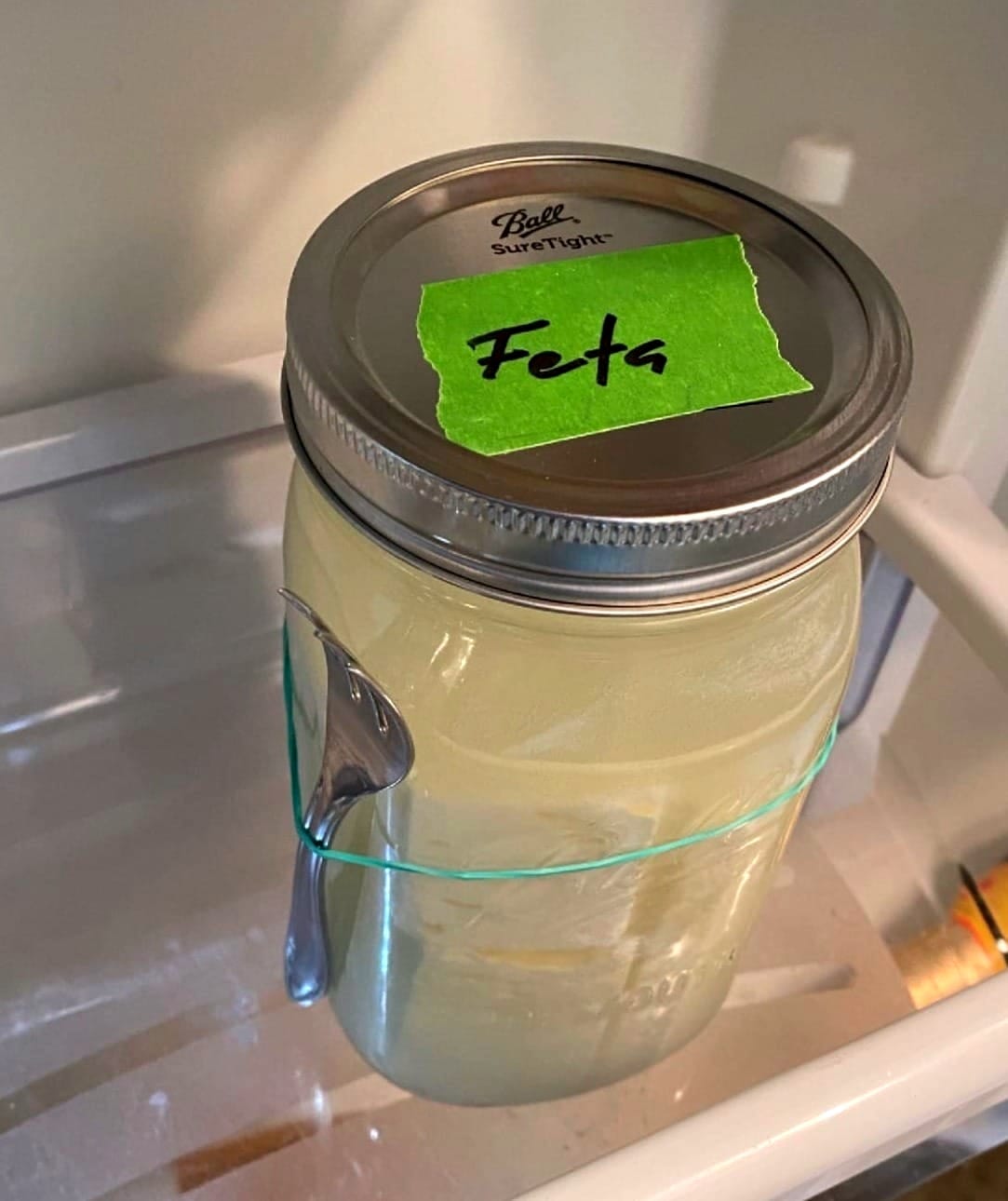
This weekend, I made a jar of feta the way I remembered it. A one-pound block, cut into thick slices, submerged in brine. Not the same container, not the same kitchen — just the same idea.
I labeled the lid with a piece of tape, in typical Greek fashion.
As I Make It Now
• One block of feta (about 1 pound), cut into thick slices
• Wide-mouth mason jar
• Cold brine (1 tablespoon salt per cup of water)
• Enough brine to fully cover the cheese
• Masking tape and a marker for the lid